
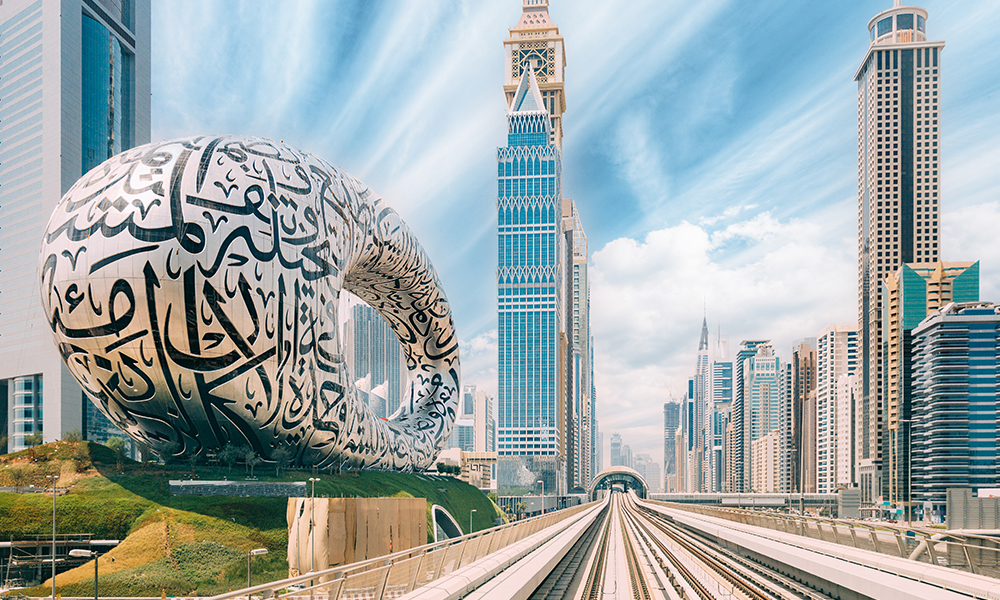
Artificial intelligence, digital assets, regulatory innovation and cross-border investment are expected to dominate discussions as Dubai accelerates its drive to become one of the world’s foremost financial centres.
Dubai has reaffirmed its determination to position itself among the world’s leading financial centres as the Dubai FinTech Summit 2026 is expected to bring together regulators, policymakers, central bankers, global financial institutions, investors, technology companies and fintech entrepreneurs to examine the next phase of international financial transformation.
Organised by the Dubai International Financial Centre (DIFC), the summit will form a central component of Dubai’s broader strategy to strengthen its position as a global hub connecting financial markets across Asia, Europe, Africa and the Middle East. The 2026 edition focuses extensively on artificial intelligence, digital banking, blockchain, digital currencies, regulatory technology, sustainable finance and cross-border investment, reflecting the rapidly evolving priorities of the international financial services industry.
The event will also align with the Dubai Economic Agenda D33, which seeks to propel Dubai into the ranks of the world’s foremost financial and commercial centres over the coming decade. Financial services occupy a central position within that strategy, supported by continuous investment in regulatory development, digital infrastructure and international partnerships.
Earlier fintech conferences frequently concentrated upon disruptive technologies, venture capital investment and startup ecosystems. The 2026 programme reflects a more mature industry increasingly concerned with governance, operational resilience, responsible artificial intelligence and regulatory certainty. Innovation achieves lasting value only when supported by strong institutional frameworks capable of maintaining public confidence and financial stability.
Artificial intelligence is expected to dominate numerous keynote sessions. Banks will demonstrate applications ranging from intelligent fraud detection and automated compliance to personalised financial services, risk assessment and operational optimisation. Technology companies will present developments involving large language models, predictive analytics and intelligent automation, while regulators will examine governance frameworks intended to ensure transparency, explainability and accountability in AI-driven financial decision-making. The emphasis extends beyond technological capability towards practical implementation within regulated financial environments.
Dubai has steadily positioned itself as a jurisdiction seeking to accommodate digital asset innovation through clearly articulated regulatory frameworks. Delegates will explore developments surrounding tokenisation, blockchain infrastructure, digital currencies and emerging capital market applications while acknowledging the continuing importance of investor protection, market integrity and prudent supervision. Participants are expected to agree that the future growth of digital finance depends upon balancing innovation with credible oversight capable of attracting institutional participation.
Cross-border finance is also expected to feature prominently. Dubai’s geographical location has long enabled it to function as a commercial gateway connecting Europe, Asia and Africa. Financial institutions participating in the summit will further examine opportunities for strengthening international payment systems, facilitating cross-border investment and improving financial connectivity between rapidly expanding economies. Executives will observe that efficient payment infrastructure and harmonised regulatory cooperation increasingly influence international business decisions, particularly as multinational corporations diversify operations across multiple jurisdictions.
This time, Cybersecurity will emerge as another defining theme. Financial institutions acknowledge that technological innovation inevitably expands digital risk alongside commercial opportunity. Banks, insurers and payment providers therefore continue investing heavily in cyber resilience, operational continuity and data protection. Industry specialists argue that cybersecurity should now be regarded as a strategic component of institutional governance rather than merely a technical function, particularly as artificial intelligence and increasingly sophisticated cyber threats reshape the financial landscape.
The summit will further examine the growing influence of regulatory technology, commonly known as RegTech. Financial institutions are increasingly adopting automated compliance systems capable of monitoring transactions, identifying suspicious activity and supporting regulatory reporting with greater efficiency. Regulators similarly recognise that technological tools can strengthen supervisory capability while reducing administrative burdens for market participants. This convergence between technology and regulation represents one of the more significant developments influencing financial services worldwide.
Another important discussion will centre upon sustainable finance. Environmental, social and governance considerations continue exerting increasing influence over institutional investment decisions. Delegates are expected to examine opportunities for expanding green finance, sustainability-linked lending and climate-related investment while integrating technological innovation into broader sustainability strategies. Participants could suggest that financial centres capable of combining digital transformation with responsible investment frameworks are likely to attract growing volumes of international capital over the coming decade.
Dubai’s expanding ecosystem of financial institutions, professional advisers and technology companies will also receive considerable attention throughout the conference. Executives will note that successful financial centres increasingly depend upon integrated ecosystems rather than isolated institutions. Banks, insurers, fintech companies, legal advisers, accounting firms, venture capital investors and regulators collectively contribute towards creating environments capable of supporting sophisticated international financial activity. Dubai’s continued investment across these interconnected sectors has strengthened its reputation as one of the Middle East’s principal financial gateways.
Several sessions will additionally focus upon talent development. Industry leaders have acknowledged that future competitiveness depends upon professionals capable of combining expertise in finance, artificial intelligence, cybersecurity, regulation and international business. Universities, professional associations and financial institutions are encouraged to strengthen education and continuous learning programmes capable of preparing future generations for increasingly technology-driven financial markets.
Although innovation remains central to virtually every discussion, delegates will return to a broader conclusion. The future success of global financial centres will depend as much upon regulatory credibility, institutional resilience and international confidence as technological sophistication. That observation carries particular significance for Dubai as it continues pursuing its long-term ambition of strengthening its influence within international financial markets.
Technology continues driving change across banking, insurance, investment management and capital markets, although industry leaders increasingly view governance as the decisive factor determining whether innovation delivers sustainable commercial value. Financial institutions may adopt similar technologies, yet the quality of regulation, institutional capability and market confidence frequently distinguishes one jurisdiction from another.
Dubai’s continuing evolution reflects this broader transition. Over the past two decades, the emirate has invested extensively in developing a financial ecosystem capable of supporting international commerce through modern infrastructure, internationally recognised legal frameworks and specialised regulatory institutions. The Dubai International Financial Centre has become an important component of that strategy by providing multinational banks, insurers, investment firms and professional service providers with an environment designed to facilitate regional and international business. Delegates are likely to observe that this institutional development has become increasingly valuable as global investors seek jurisdictions combining innovation with regulatory predictability.
The summit will also highlight the growing importance of international collaboration. Financial crime, cybersecurity threats, digital assets and artificial intelligence increasingly transcend national borders, requiring regulators and financial institutions to strengthen cooperation while maintaining market integrity. Several discussions explore opportunities for enhanced information sharing, supervisory dialogue and coordinated regulatory approaches capable of supporting innovation without compromising financial stability. Such cooperation has become progressively more significant as financial systems grow increasingly interconnected through technology and cross-border commerce.
With institutional investors expected to attend the conference, there are indications that investment priorities have evolved considerably during recent years. Earlier periods frequently rewarded rapid expansion and technological disruption. Contemporary investment strategies increasingly incorporate assessments of governance quality, operational resilience, environmental responsibility and long-term regulatory certainty. Asset managers, pension funds and sovereign wealth funds now evaluate financial centres through broader institutional criteria before committing significant capital. Dubai’s emphasis upon regulatory development and professional infrastructure therefore aligns closely with these changing expectations.
The summit will examine the continuing growth of digital payments and cross-border financial connectivity. Businesses operating across multiple jurisdictions increasingly require payment systems capable of supporting real-time transactions, efficient settlement and transparent compliance procedures. Participants will discuss emerging technologies designed to improve transaction speed while reducing operational complexity, recognising that efficient payment infrastructure contributes directly to international trade, investment and financial inclusion. Dubai’s position as a regional commercial gateway naturally strengthens its role within these developments.
Another recurring theme involves the future of wealth management. The Middle East continues generating substantial private wealth while international family offices increasingly expand their presence across the region. Delegates are expected to observe that successful wealth management now extends beyond investment performance to encompass governance, succession planning, philanthropy, risk management and international mobility. Financial centres capable of supporting these sophisticated requirements through experienced professional advisers and stable regulatory environments are likely to attract increasing numbers of high-net-worth individuals and institutional clients.
Insurance will also feature within broader discussions concerning financial resilience. Insurers play a critical role in supporting economic development by managing risk associated with infrastructure projects, international trade, cyber threats and emerging technologies. Artificial intelligence is already influencing underwriting, claims management and fraud detection, creating opportunities for greater operational efficiency while reinforcing the importance of transparent governance. Dubai’s expanding insurance sector therefore contributes significantly to the emirate’s broader financial ambitions by complementing banking, investment and capital market activities.
Education and professional development attract considerable attention and participants will consider the long-term sustainability of financial innovation. The rapid pace of technological change requires continuous learning across every segment of the financial services industry. Universities, regulators, technology companies and financial institutions will be encouraged to collaborate more closely in developing programmes addressing artificial intelligence, cybersecurity, digital finance, sustainable investment and regulatory compliance. Building human capital is widely recognised as being equally important as investing in digital infrastructure.
The conference will further illustrate how financial centres increasingly compete through ecosystem development rather than isolated policy initiatives. Banks require technology partners, investors require legal certainty, entrepreneurs require access to capital, regulators require skilled professionals and multinational corporations require integrated commercial environments. Dubai’s strategy has consistently sought to strengthen each of these interconnected components, creating a financial ecosystem capable of supporting diverse commercial activities across multiple sectors.
Observers suggest that Dubai’s broader economic strategy has contributed significantly to this momentum. The emirate’s continued investment in transport, logistics, aviation, tourism and digital infrastructure complements the development of financial services by reinforcing its position as an international business hub. Such integration enhances the attractiveness of Dubai for multinational corporations seeking regional headquarters capable of coordinating operations across Europe, Asia and Africa.
Several international executives also remark upon the importance of policy continuity. Financial institutions undertaking long-term investments value jurisdictions where strategic priorities remain consistent despite changing economic conditions. Dubai’s sustained commitment to financial sector development has encouraged confidence among multinational organisations evaluating regional expansion opportunities. This continuity supports not only commercial investment but also the broader reputation of the emirate as a dependable financial jurisdiction.
The financial services industry has entered a period where technological innovation and institutional governance will become increasingly inseparable. Artificial intelligence, digital assets, blockchain and advanced payment systems are expected to continue transforming global finance, although their success will depend upon regulatory frameworks capable of maintaining market confidence and protecting financial stability. Jurisdictions demonstrating leadership across both dimensions are likely to emerge as the principal beneficiaries of this transformation.
For Dubai, the 2026 FinTech Summit will represent another important milestone within a much longer strategic journey. The event will showcase technological innovation, attract influential international participants and reinforce the emirate’s commitment to strengthening its position within global finance. More importantly, it will demonstrate that Dubai increasingly understands the broader foundations of financial leadership. Competitive advantage in modern finance depends upon trust, institutional capability, regulatory maturity and international collaboration alongside technological progress.
That combination continues shaping Dubai’s emergence as one of the world’s most influential financial centres. The discussions held during the summit suggest that the emirate intends to pursue innovation with discipline, encourage investment through confidence and strengthen its international standing by demonstrating that sustainable financial leadership rests upon governance every bit as much as technology. Such an approach positions Dubai to play an increasingly significant role within the evolving architecture of global financial services over the coming decade.
The practical implication is clear: jurisdictions that treat regulation, talent and ecosystem design as core products - not afterthoughts - will be the ones that attract durable institutional capital. Dubai’s trajectory offers a template for other emerging financial hubs, including in Asia and Africa, that aspire to move beyond transactional growth towards long-term structural relevance.
LinkedIn URL: https://www.linkedin.com/pulse/dubai-fintech-summit-reinforce-emirates-l0u1f